
Can a Worn Car Seat Be Repaired? Leather, Foam & Bolster Damage Explained
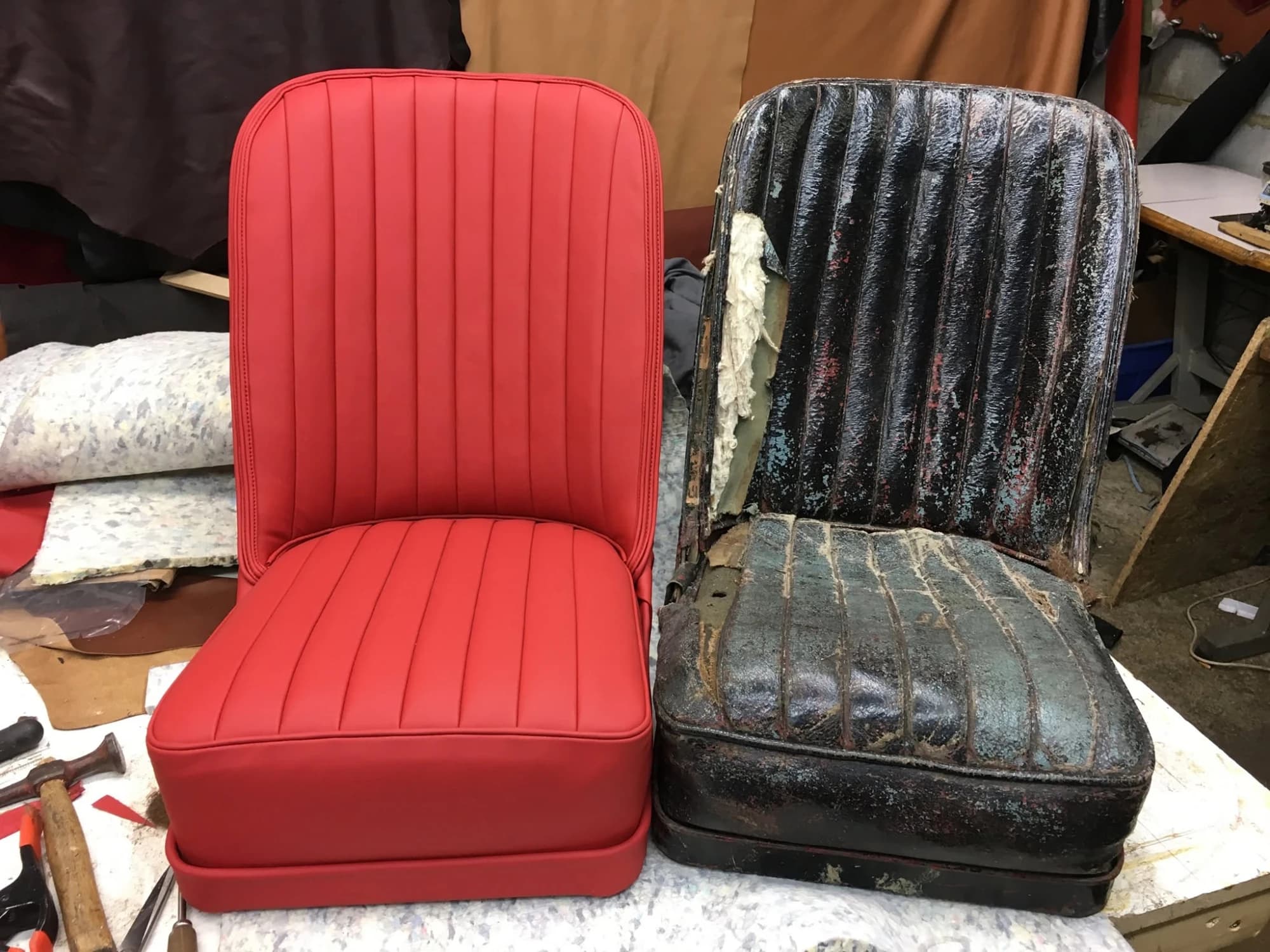
From the workshop · Gigi Auto Upholstery · Bicester, Oxfordshire
A car seat does a lot more than provide somewhere to sit. It takes the wear of every journey: getting in and out, shifting your weight, daily friction and years of use. Often, the first signs appear on the driver’s outer bolster. The covering becomes shiny or thin, the stitching gives way, or the cushion no longer supports you as it once did.
The good news is that a worn car seat does not automatically need replacing. Depending on the condition of its upholstery, padding and underlying structure, a specialist may be able to repair a damaged area, replace individual panels, rebuild worn padding or retrim the seat. The right approach starts with understanding what has actually failed.
At Gigi Auto Upholstery, near Bicester in Oxfordshire, we work on both modern and classic car interiors. Here is what to look for, what the different repairs involve and how three real workshop projects illustrate the possibilities.
What Wears Out First on a Car Seat?
Leather and upholstery coverings
Leather can develop a polished or worn-looking surface where clothing repeatedly rubs against it. With heavier wear, cracks may deepen, the finish may break down and the covering can eventually split. Fabric and synthetic upholstery can suffer from fraying, thinning, tears and failed seams too.
Not every mark calls for a new seat cover. Light surface wear may be suitable for careful refinishing, while split or weakened material often calls for a more substantial repair or the replacement of a panel.
A professional assessment matters: a cosmetic finish cannot restore the strength of material that has deteriorated beyond repair.
Side bolsters
The raised sides of a seat help position and support the occupant. The outer bolster, particularly on the driver’s seat, is exposed to repeated pressure as people enter and leave the car.
Over time, the cover may tear, the foam beneath may compress, or both problems may occur together.
A successful seat bolster repair looks beyond the visible tear. If the padding has lost its shape, simply covering the damaged area may leave the seat feeling uneven or cause premature wear in the new upholstery.
Foam, seams and seat structure
Seat foam gives the cushion its contour and much of its comfort. When it breaks down, the seat can feel flat or unsupportive even when the upholstery still looks reasonable.
Failed stitching can allow otherwise usable panels to separate.
The seat frame, mounting points, adjustment mechanisms and any integrated safety systems are separate considerations. Damage affecting those parts needs appropriate assessment; upholstery work should never compromise a seat-mounted airbag or other safety equipment.
Repair, Re-cover or Retrim: What’s the Difference?
Localised repair is appropriate when the damage is limited and the surrounding material remains sound. This might involve attending to a seam, a small damaged area or the finish of suitable leather.
Panel replacement addresses a larger tear or a section that is too weak to repair reliably. Matching the colour, grain, texture and stitching to neighbouring material is important, particularly when the aim is to retain the original appearance.
Foam repair or reshaping may be needed when bolsters have collapsed or a cushion has lost support. The upholstery and the padding should be assessed together, rather than treating the visible cover as the whole problem.
A full retrim becomes worth considering when wear is widespread, the existing covering is beyond economical repair, or the owner wants to change the interior’s appearance. On a classic car, the brief may instead be to preserve a period-correct look as closely as practical.
The best option is not always the most extensive one. It is the one that addresses the underlying condition of the seat and produces a durable, appropriate finish.
From the Workshop: Three Very Different Seat Transformations
The following photographs are from Gigi Auto Upholstery’s workshop. They show three distinct types of seat wear and the finished upholstery.
The images demonstrate visible results; they do not, by themselves, establish every material or internal repair technique used.
01 — Torn Fabric Bolsters, Distinctive Checked Centre
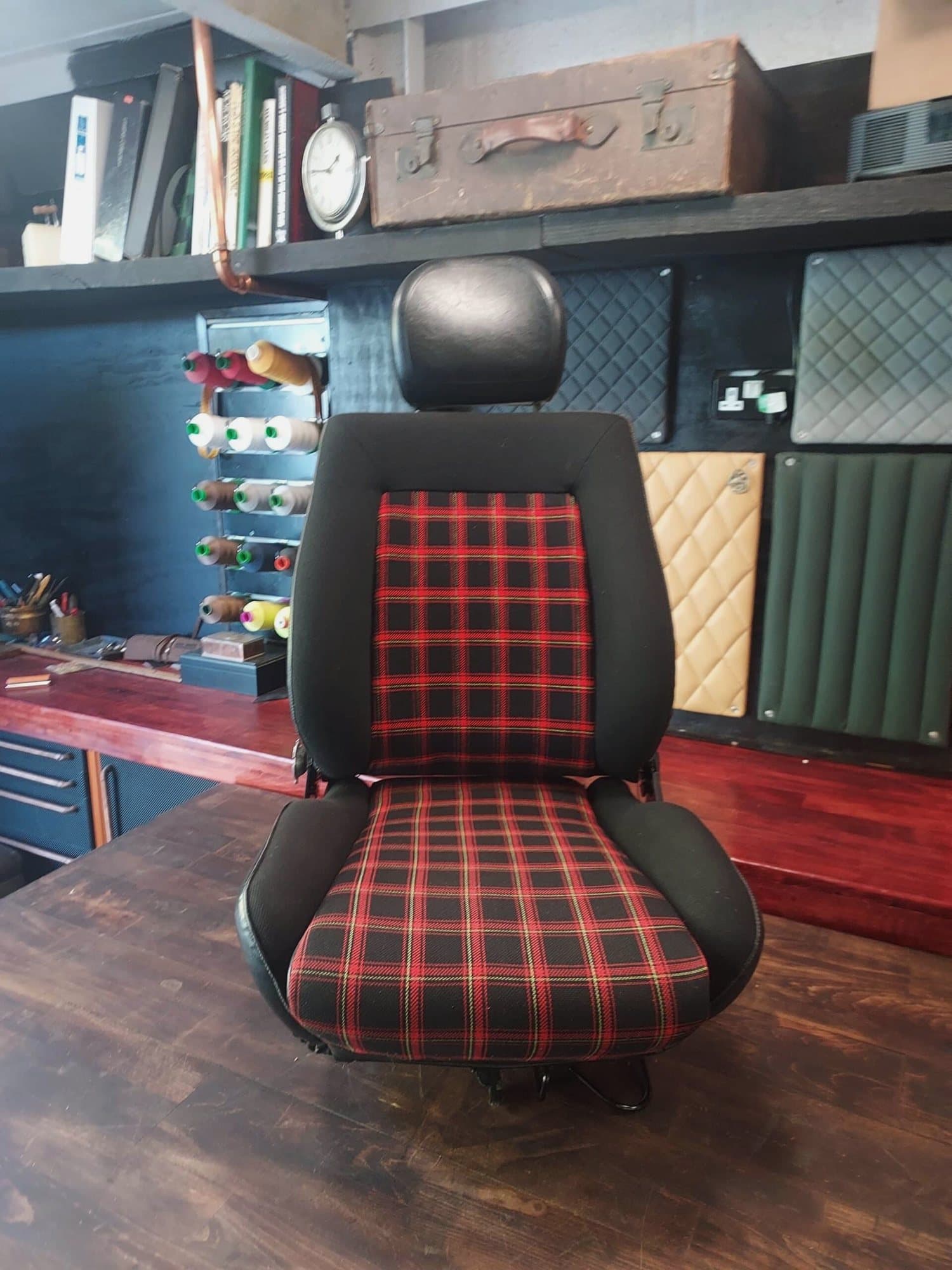
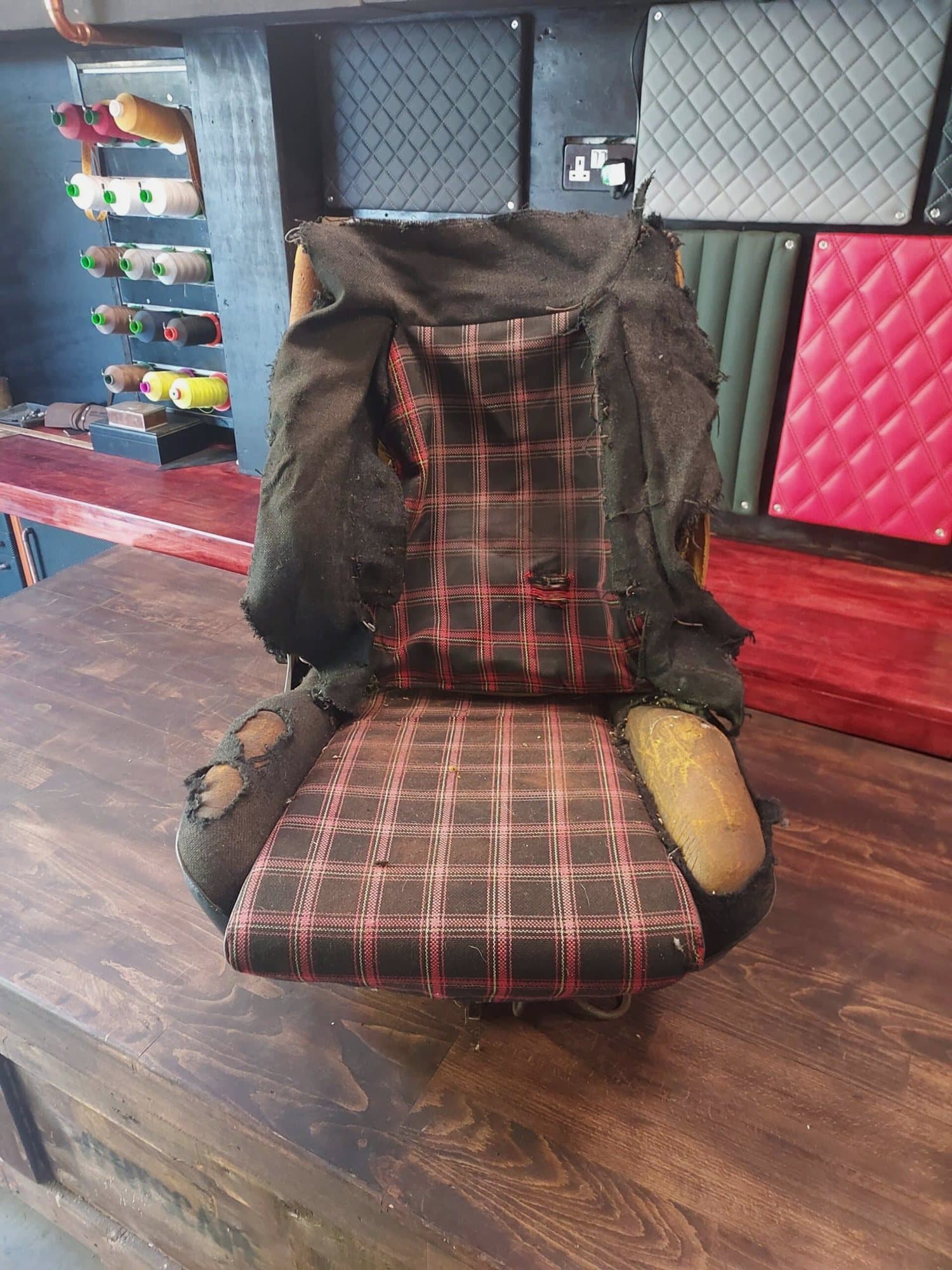
The first seat had extensive damage around its side bolsters. The covering had torn away in places, exposing the yellow padding beneath, while the black-and-red checked centre panels remained a distinctive feature of the seat.
In the finished photograph, the seat has neatly shaped dark side sections and a cleanly presented checked centre.
It is a useful example of why car seat upholstery repair is about more than hiding a hole: the surrounding shape, seams and the relationship between original-style fabric and newly finished sections all affect the result.
Before
After
02 — Severely Deteriorated Red Upholstery
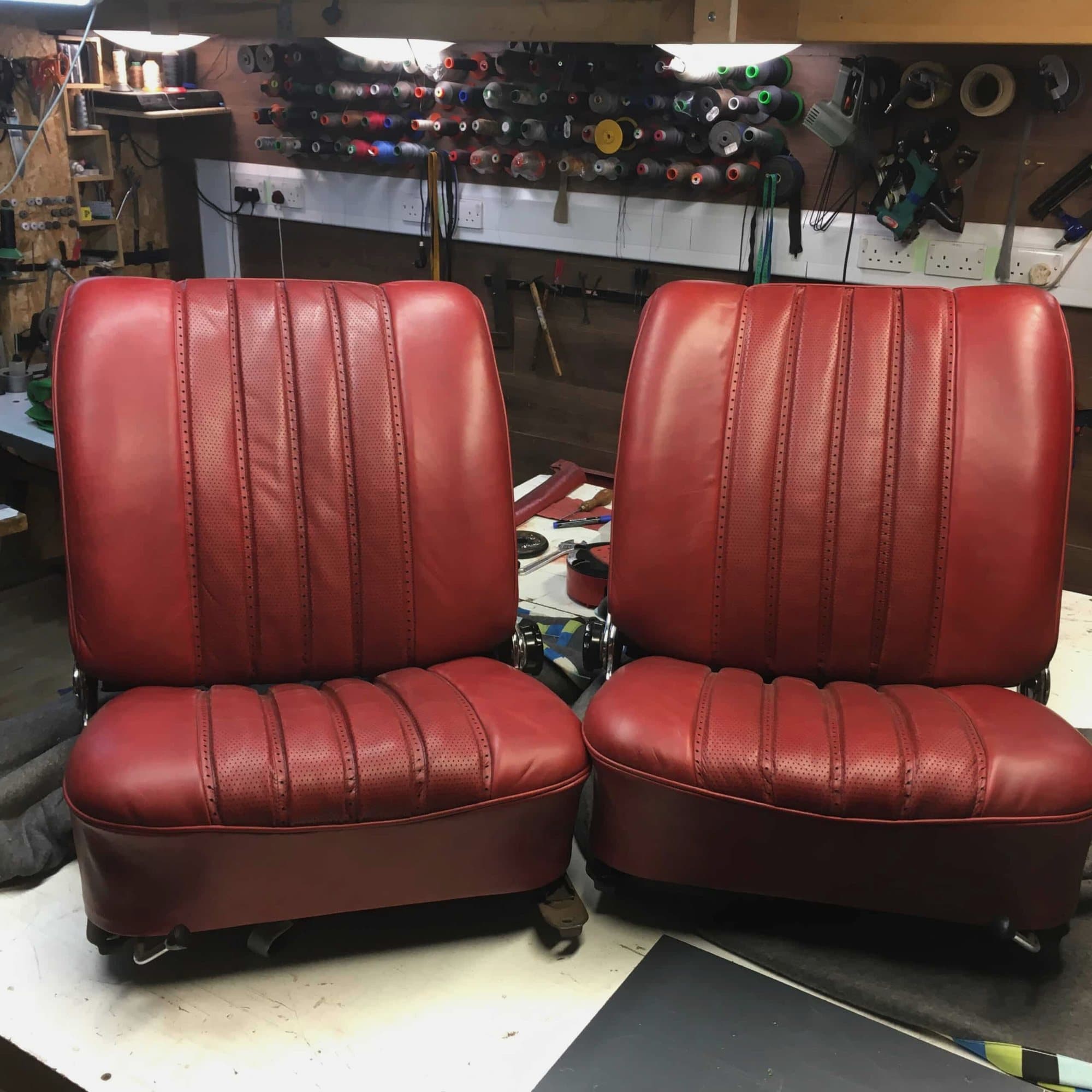
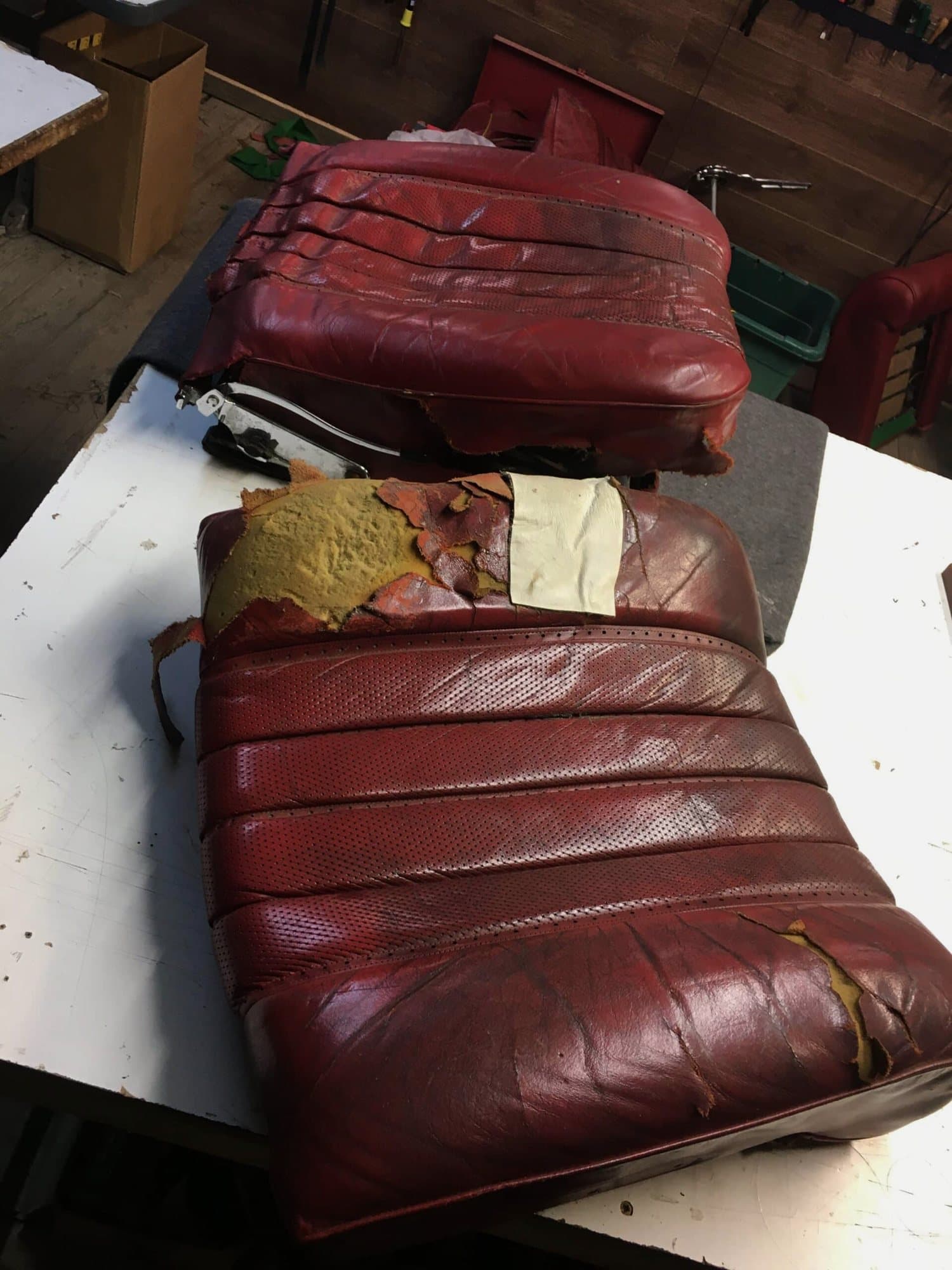
The second project shows how far upholstery can deteriorate. The close-up before photograph records a red seat covering with large splits, missing sections and exposed padding.
The finished photograph shows a matching pair of red seats with defined stitched channels and a consistent finish.
When existing material is extensively torn or weakened, a superficial treatment may not be enough.
Depending on the seat’s construction and condition, replacement upholstery panels or a more comprehensive car seat retrim may offer a more appropriate result.
These images show the visible transformation without claiming a specific technique that has not been independently documented.
Before
After
03 — Worn Black Seat Surfaces Brought Back to a Consistent Finish
The third project is less dramatic at first glance, but it will be familiar to many drivers.
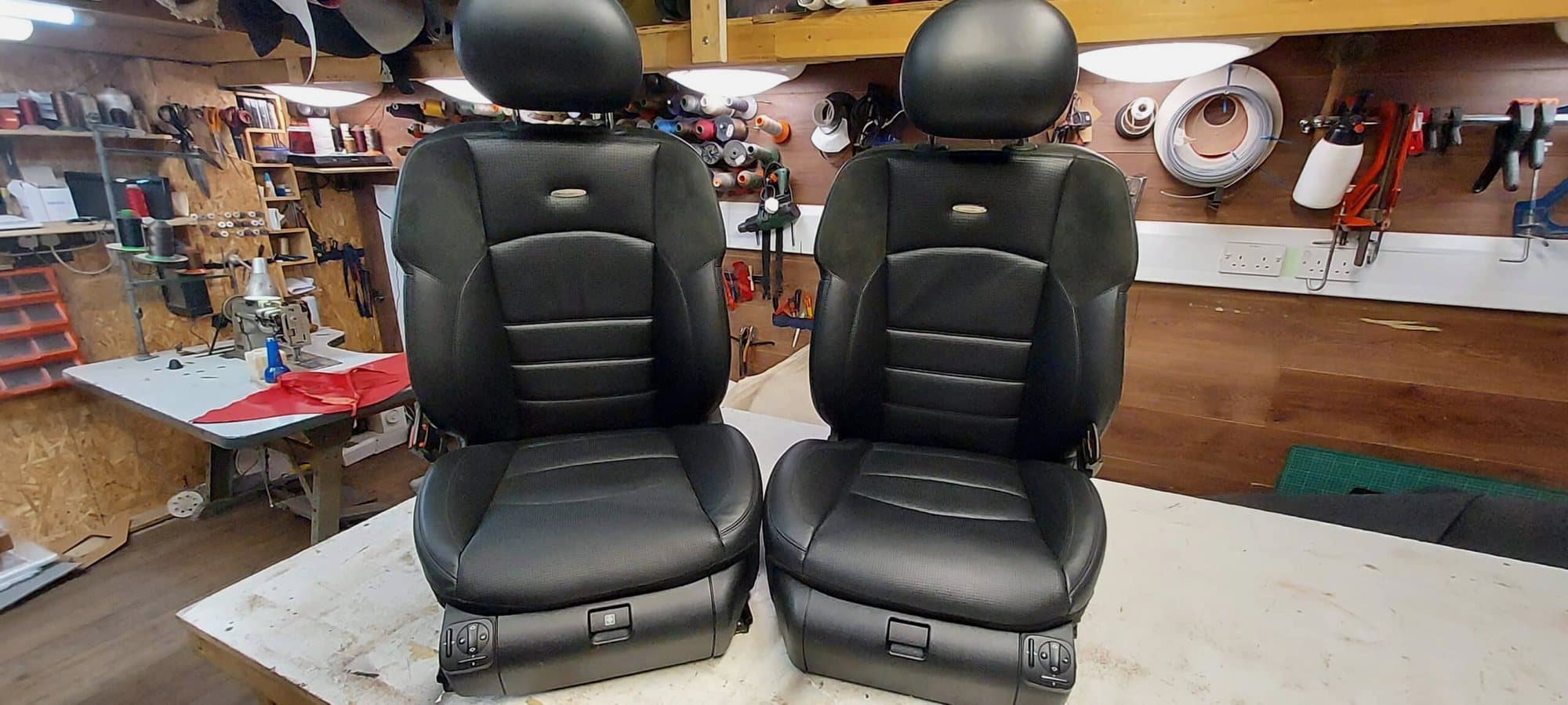
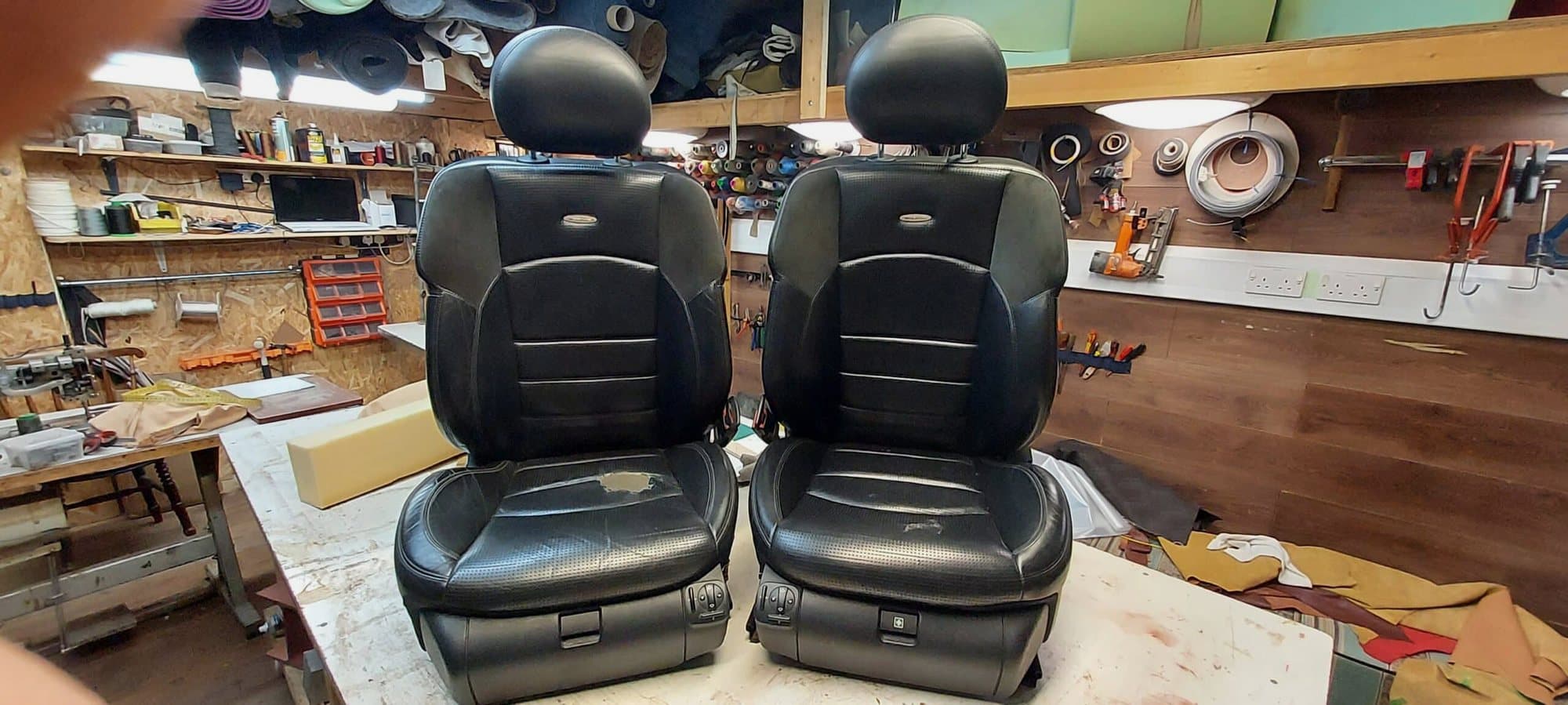
In the before photograph, the black seat bases show obvious worn, lighter patches across high-contact areas. The finished pair has a much more even appearance, with the seat shapes and original design details still clearly visible.
This is precisely why an assessment matters.
A tired-looking seat might need attention to its surface, sections of its covering or the underlying padding. Photographs can help establish the condition, but the appropriate repair is determined by inspecting the seat itself.
Before
After
When Is a Repair Worth It — and When Is a Full Retrim Better?
A repair may be the sensible choice when the damage is confined to one bolster, seam or panel and the rest of the seat remains in good condition.
It can help preserve an otherwise serviceable interior, especially when the existing upholstery has a distinctive design.
A more extensive retrim may make sense when several areas have failed, the covering is brittle or severely worn, or replacement sections cannot be matched satisfactorily.
For older vehicles, material availability and the owner’s preferred level of originality also influence the recommendation.
There is no reliable one-price-fits-all answer. The extent of the damage, seat construction, material choice, access to replacement materials and amount of work involved all affect the quotation.
A small split and a seat with collapsed bolsters are very different jobs, even if both are described as a ‘seat repair’.
Can Cracked Leather Be Repaired Without Replacing It?
Sometimes.
Superficial wear and certain small defects may be suitable for specialist leather refurbishment. Deep cracks, large tears and leather that has lost its strength are different problems.
In those cases, replacing the affected upholstery section can be more appropriate than trying to disguise the damage.
It is also worth remembering that not every black or leather-look seat covering is necessarily leather. Material identification matters before choosing a repair method.
What Should You Send When Asking for a Seat Repair Quote?
A few clear photographs often make the first conversation much more useful.
Include one photograph of the complete seat, a close-up of each damaged area and, if possible, a view from the side that shows whether the bolster has lost its shape.
Tell us the vehicle’s make, model and year, and describe whether the issue is a tear, worn covering, collapsed padding or something else.
Photographs help us understand the enquiry, but some jobs require an in-person inspection before the work and quotation can be confirmed.
If the seat has damaged safety components, mounts or mechanisms, make that clear at the outset.
Car Seat Repair in Bicester and Oxfordshire
Whether the problem is a torn bolster, tired leather, damaged fabric or a seat that has lost its shape, the first step is to find out what can be repaired and what needs replacing.
A well-considered repair should respect the seat’s construction, appearance and intended use — not simply make the damage less visible in a photograph.
At Gigi Auto Upholstery, our workshop near Bicester undertakes upholstery repairs, retrimming and interior restoration work for modern and classic vehicles.
Not sure what your seat needs?
Explore our Repairs service or send us photographs of the damage.
We can discuss the options and advise whether an inspection would be the best next step.
Back to Blog